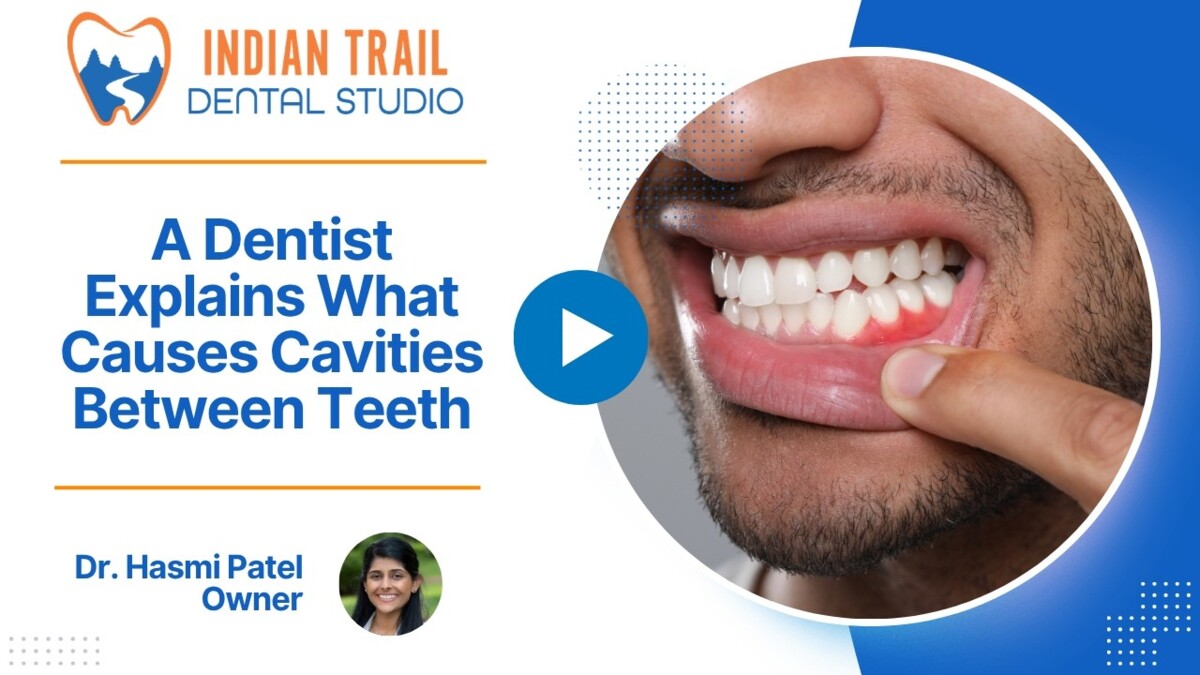
Cavities between teeth form when plaque and sugars remain on the side surfaces that toothbrush bristles cannot clean effectively. Bacteria in plaque produce acids that weaken enamel, and the hidden location allows decay to develop without an obvious hole or early pain.
Daily interdental cleaning is therefore essential for cavity protection. Regular dental exams and clinically appropriate X-rays can also reveal early changes between neighboring teeth before patients can see or feel them.
Why Cavities Between Teeth Form
The National Institute of Dental and Craniofacial Research explains that the tooth decay process begins with repeated mineral loss when plaque bacteria use sugars and starches to produce acids. Saliva and fluoride can help replace some of those minerals, but repeated acid exposure may eventually create permanent damage.
Toothbrush Bristles Miss Tight Contact Areas
A toothbrush cleans the front, back, and chewing surfaces of teeth, but its bristles cannot fully pass through the contact points where neighboring teeth touch. Plaque and food debris can remain on those side surfaces even when someone brushes twice a day.
Daily interdental cleaning reaches the areas brushing leaves behind. The role of flossing between tightly spaced teeth is to remove plaque along surfaces that toothbrush bristles cannot clean effectively.
Frequent Sugar Exposure Restarts the Acid Cycle
The amount of sugar in a person’s diet matters, but frequency also affects decay risk. Each sugary snack or drink gives plaque bacteria another opportunity to produce acid, especially when someone grazes or sips over an extended period.
Keeping sweets to defined eating times, drinking water, and allowing saliva time to restore the mouth’s normal environment may reduce repeated exposure. These habits support prevention but do not replace fluoride toothpaste or interdental cleaning.
Some Patients Have Additional Risk Factors
Crowded teeth, dry mouth, previous cavities, orthodontic appliances, certain dental restorations, and inconsistent fluoride exposure can make contact areas more difficult to protect. Pregnancy-related changes may also affect gum health, diet, nausea, and home-care routines.
During pregnancy, changes in dental health and oral hygiene may influence cavity risk and make individualized preventive advice more useful.
These Cavities Can Stay Hidden Without Pain
Interproximal decay develops on surfaces that are difficult to inspect in a mirror. Early mineral loss may not cause sensitivity, chewing pain, or visible discoloration, so feeling fine does not confirm that the contact areas are healthy.
The belief that cavities always cause immediate symptoms is one of several common dental cavity myths. Waiting for pain can allow a smaller area of decay to become deeper and require more involved treatment.
X-Rays Help Reveal Decay Between Teeth
A clinical exam can identify visible plaque, enamel changes, damaged restorations, and other risk factors, but the contact areas between back teeth may remain partly hidden. Dental X-rays can provide another view when the dentist needs more information.
What Bitewing X-Rays Can Show
Bitewing X-rays display the crowns and contact areas of upper and lower teeth. They can help reveal changes in enamel or dentin that are not visible during a direct examination.
At Indian Trail Dental Studio, our dental exam may include X-rays when they are needed to evaluate possible decay or other conditions. The dentist reviews the images together with the clinical findings before recommending treatment.
X-Ray Timing Depends on Individual Risk
Not every patient needs dental X-rays on the same schedule. Timing depends on age, symptoms, cavity history, current risk, previous images, and what the dentist sees during the examination.
Patients with recurring decay or several restorations may need imaging at a different interval from someone with a long history of stable oral health. The goal is to obtain images when they can answer a clinical question, not simply because a fixed amount of time has passed.
Daily Habits That Reduce Cavity Risk Between Teeth
Prevention requires cleaning the hidden surfaces consistently and reducing conditions that allow acid attacks to repeat throughout the day.
- Brush twice daily with fluoride toothpaste.
- Clean between every tooth once a day.
- Curve floss against one tooth surface, then the other.
- Use an interdental tool that fits your needs and abilities.
- Limit frequent sugary snacks and drinks.
- Drink water regularly, especially when your mouth feels dry.
- Keep exams and cleanings on the schedule recommended for your risk.
String floss is not the only option. Floss picks, interdental brushes, and water flossers may work better for some patients, but the chosen tool still needs to clean along the sides of the teeth rather than simply pass through the contact point.
Professional Cleaning Supports but Does Not Replace Flossing
Professional dental cleanings handle two different things: the soft bacterial layer, which comes off with air polishing, and hardened tartar, which needs an instrument. Only the first of those is something you could have managed at home. They also give the dental team an opportunity to identify contact areas where plaque repeatedly accumulates and recommend a better flossing angle or tool.
We also offer Guided Biofilm Therapy, which removes the bacterial biofilm with a gentle spray before any scaling, reaching between teeth and along the gumline where instruments work blind. It still happens a few times a year. Biofilm starts rebuilding within hours of brushing, so nothing we do in the chair substitutes for cleaning between your teeth daily.
Treatment Depends on How Far Decay Has Progressed
Early mineral loss may sometimes be stopped or reversed before the enamel surface develops a permanent hole. Fluoride, improved plaque control, dietary changes, and closer monitoring may support remineralization when the dentist determines the area is still non-cavitated.
Once a cavity has formed, the damaged tooth structure cannot grow back. Treatment may involve removing the decay and restoring the tooth with a dental filling, with the exact plan based on the depth and location of the damage.
Protect More Than the Visible Surfaces
Cleaning between the teeth is part of protecting the entire mouth, not an optional extra after brushing. Plaque left at the contact points can affect enamel and gums even when the visible tooth surfaces look clean. These daily habits also support the broader connection between oral health and overall wellness.
Indian Trail Dental Studio combines comprehensive exams, patient-specific X-rays, professional cleaning, flossing guidance, and restorative treatment when necessary. Schedule a visit with our Indian Trail, NC team to identify and prevent cavities between teeth before they become larger problems.