
A cleaning built around removing the bacteria that cause gum disease and cavities — thoroughly, and far more comfortably than scraping alone.
At Indian Trail Dental Studio, we clean using Guided Biofilm Therapy (GBT), a modern approach that targets dental biofilm: the living layer of bacteria behind cavities, gum inflammation, gum disease, and bad breath. Instead of starting with instruments and working tooth by tooth, GBT starts by finding exactly where that bacteria has built up, removes it with a gentle spray of air, warm water, and fine powder, then finishes by clearing any hardened tartar that remains. The result is a cleaning that’s more thorough where it matters and noticeably easier to sit through.
Guided Biofilm Therapy is a complete cleaning approach, not a single tool. That distinction matters, because the part patients notice most — the gentle spray, known as air polishing — is only one component of the process.
A GBT cleaning has three stages. First we assess: we find and reveal where bacterial biofilm is actually sitting, including the places that are easy to miss at home. Then we remove that biofilm using air polishing, a controlled spray of air, warm water, and a fine, low-abrasive powder (typically glycine or erythritol). Finally, we clean up what the spray can’t handle — hardened tartar — with precise ultrasonic scaling, used only where it’s genuinely needed.
Each stage depends on the one before it. Assessing first means we know where to concentrate. Removing biofilm before scaling means less instrument time overall, because we’re not scaling surfaces that are already clean. That sequence is what makes GBT an approach rather than just a piece of equipment.
Biofilm is the sticky bacterial layer that forms on teeth and gums within hours of brushing, and it’s the starting point for most of what goes wrong in a mouth: decay, gingivitis, gum disease, bad breath, and inflammation around implants. Left in place, it keeps gums quietly inflamed — which is what makes them bleed when you brush, and what eventually breaks down the attachment between gum, bone, and tooth.
Traditional cleanings do remove biofilm, but instruments struggle to reach all of it: between teeth, just under the gumline, in grooves, and around brackets, crowns, and implants. Guided Biofilm Therapy is built around those exact areas, so the cleaning addresses the cause rather than the symptoms. Research into the link between gum health and general health is still developing, but the practical point isn’t in doubt — healthy gums start with controlling bacteria, consistently.
GBT is a good fit for most patients, and a particularly good fit if the scraping of a standard cleaning is something you dread, if dental visits make you anxious, or if you have sensitive teeth, staining, braces, or implants. At your visit, we’ll tailor the dental cleaning service to what your mouth actually needs.
GBT is also particularly valuable in two situations where ordinary cleaning struggles: caring for dental implants, where metal instruments can damage the very surface you’re protecting, and cleaning around braces, where hardware creates dozens of places for bacteria to hide. It’s also what we use for dental stain removal.
Guided Biofilm Therapy (GBT) is the foundation of several focused cleanings. Learn more about each:
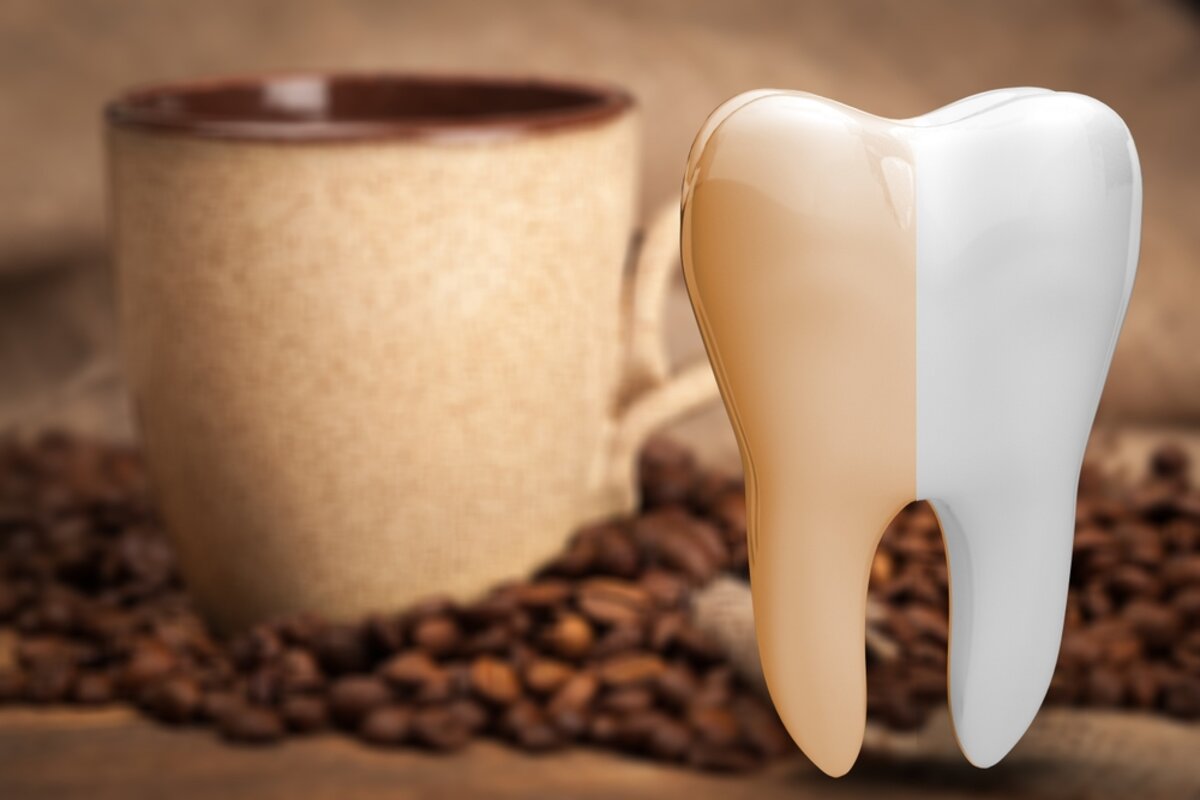
The same spray that clears biofilm also lifts surface stains from coffee, tea, wine, and tobacco, including from between teeth and along the gumline where traditional polishing misses. Cleaner gums and a brighter smile in one step.
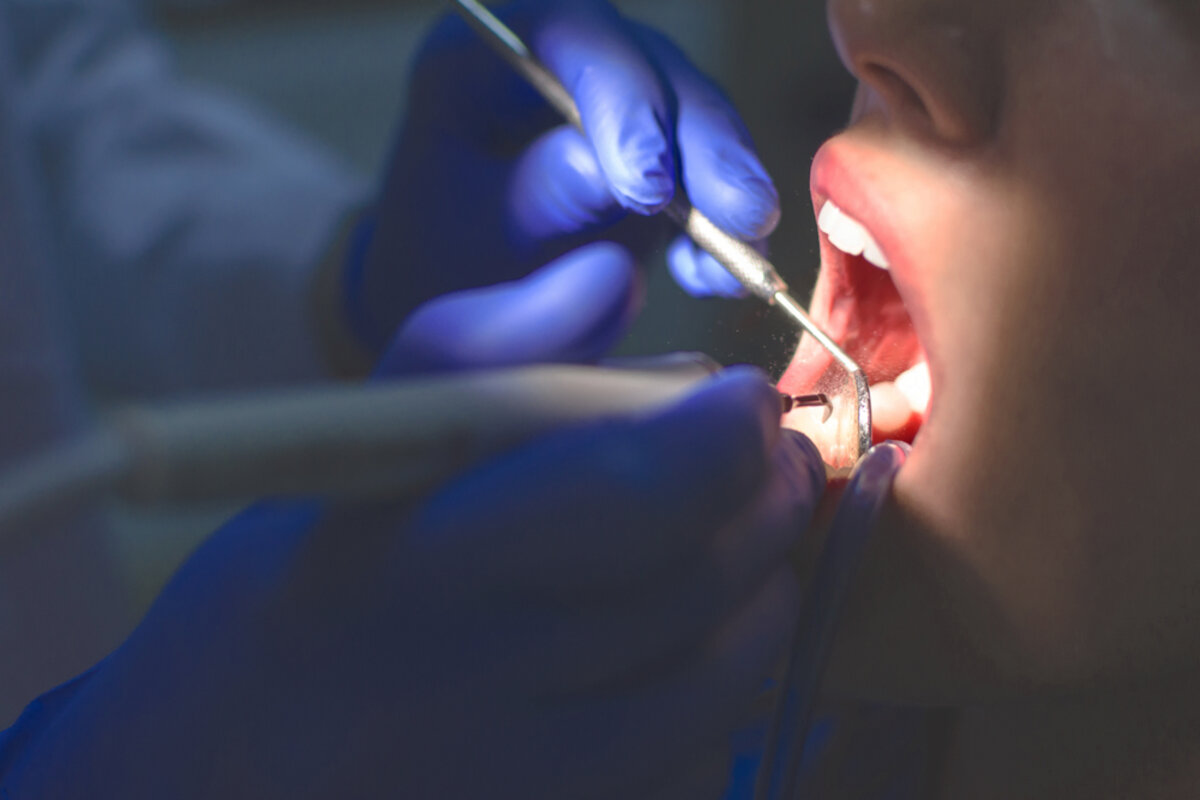
Implants need maintenance that keeps the surrounding gum and bone healthy without damaging the implant itself. GBT clears biofilm from around the crown and implant threads without the scratching that metal instruments can cause, helping protect your investment long term.
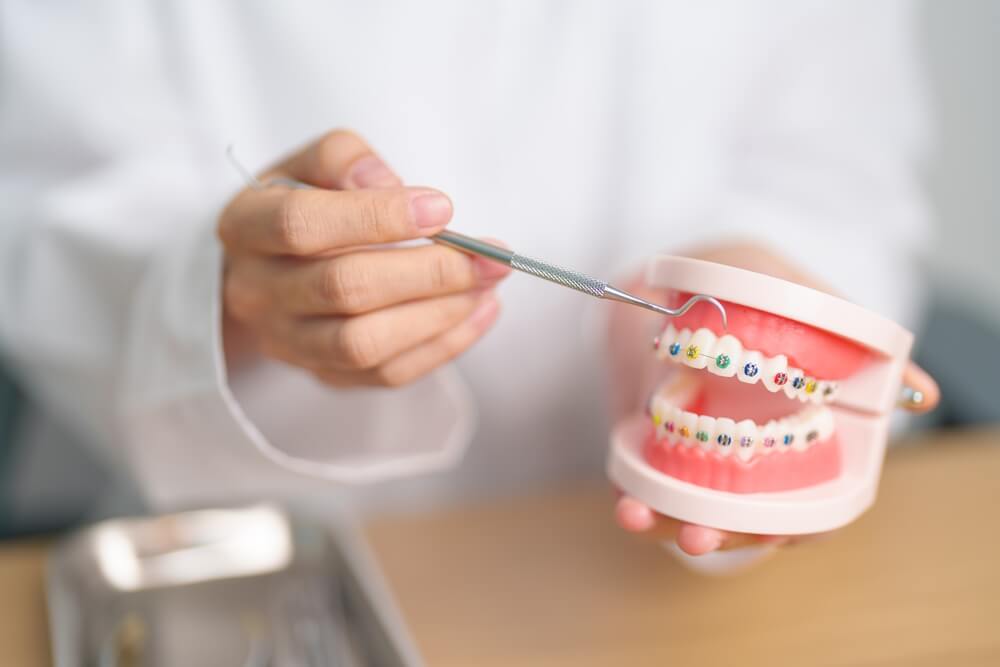
Brackets and wires trap bacteria where toothbrushes and hand instruments struggle to reach. GBT cleans around the hardware, helping prevent gum inflammation and the chalky white marks that can appear during treatment.
We find the biofilm before we touch anything. We apply a harmless coloring solution that makes plaque and biofilm visible, so both you and your hygienist can see exactly where bacteria has collected. Then we show you. Most patients are surprised by at least one spot, and knowing where your own problem areas are is one of the most useful things you’ll take home from the visit. This is also where we check the health of your gums and note anything that needs attention.
The gentle spray does the main work. Using air polishing, we clear the revealed biofilm and surface stain with a spray of air, warm water, and fine powder. It reaches around and between teeth, along the gumline, and around implants, crowns, and brackets. There’s no gritty paste and no scraping, and the water is warmed, which is what makes the difference if cold sensitivity is usually the worst part of your cleaning for you.
Scaling only where it’s actually needed. Anything that has hardened into tartar won’t come off with a spray, so we remove it with precise ultrasonic scaling. Because the biofilm is already gone, this stage is usually quick, and often isn’t needed on every tooth. We finish by checking everything is smooth, applying fluoride if it’s right for you, and setting your next visit at the interval that keeps your gums healthiest.
If the scraping metal and icy water of traditional cleanings have kept you away from the dentist, Guided Biofilm Therapy (GBT) is worth trying. A gentle, warm micro-mist does most of the work, without the friction, noise, or sensitivity. We’ll always work at your pace, and you can stop us at any point. Book online or give us a call.
GBT stands for Guided Biofilm Therapy. It’s a complete approach to cleaning teeth that focuses on finding and removing dental biofilm — the bacterial layer that causes cavities and gum disease — rather than working through the mouth with instruments alone. Air polishing, the gentle spray, is one component of it.
It’s a more thorough way to do the part of cleaning that matters most: removing bacteria. It doesn’t replace clinical judgment, and we still use ultrasonic scaling for hardened tartar where it’s needed. Most patients find the combination both more comfortable and more thorough than scraping alone.
No. There’s no heavy scraping and no gritty polishing paste. Warm water makes it comfortable even for sensitive teeth, and most patients describe it as a gentle spray.
It’s suitable for most patients. There are a few situations — certain respiratory conditions, or dietary considerations relating to specific powders — where we’ll adjust the approach. We’ll review your health history and personalize your cleaning.
Sometimes, and only where tartar has hardened. Biofilm removal handles the soft bacterial layer; tartar is calcified and needs an instrument. The difference is that we scale far less, because we’re not working over surfaces that are already clean.