Most toothpaste boxes make similar promises, but the formulas are not all designed to solve the same problem. Your toothpaste choice matters because the active ingredients, intended use, and evidence behind the product determine what it can realistically do for your teeth and gums.
The best option is not necessarily the most expensive tube or the one with the boldest whitening claim. Start with two evidence-based basics, then choose any additional features according to your cavity risk, sensitivity, staining, gum health, and recommendations from your dental team.
Start With Fluoride and the ADA Seal
A fluoride toothpaste with the ADA Seal of Acceptance provides an evidence-based starting point for daily care. Fluoride helps enamel resist acid attacks and supports remineralization in weakened areas before the damage progresses into a cavity.
Here is what makes the Seal worth looking for. The FDA sets requirements for fluoride toothpaste, but does not test individual products to verify compliance. Seal products have submitted data that the ADA Council on Scientific Affairs actually evaluated. It does not mean every claim on the box applies to you, but it separates tested from asserted.
Why Your Toothpaste Choice Matters for Different Needs
After confirming that a toothpaste contains fluoride and meets an appropriate evidence standard, consider what you actually need it to address. A product formulated for sensitivity may use different active ingredients from one focused on tartar control, surface stains, or cavity prevention.
Frequent Cavities or Early Enamel Concerns
Fluoride toothpaste remains an important part of reducing cavity risk, but patients who develop decay repeatedly may need more than a different product. Dry mouth, frequent sugar exposure, brushing technique, crowded teeth, fluoride use, and existing dental work can all affect how easily cavities form.
The idea that decay comes from one isolated habit is one of several common cavity misconceptions. A dental exam can help identify the combination of factors affecting a particular patient.
Tooth Sensitivity
Sensitivity toothpaste helps when exposed dentin lets temperature changes reach the nerve. About 11.5 percent of patients deal with it. A 2023 systematic review found stannous fluoride, potassium, and arginine all reduce the pain with twice-daily use, so those are the ingredients worth finding on the box. All of them need weeks of consistent use, not one brushing.
New, severe, or persistent sensitivity should not automatically be managed with a specialty toothpaste. Decay, cracked teeth, receding gums, worn enamel, or a damaged restoration can produce similar symptoms and may require an exam.
Gum Health and Plaque Control
Some toothpastes include ingredients intended to support plaque control or reduce gingivitis. These products may complement careful brushing and interdental cleaning, but they cannot remove hardened tartar once it has attached to the teeth.
Bleeding or inflamed gums also deserve attention if the problem continues. A different toothpaste may improve comfort or plaque control, but it should not delay evaluation for gum disease or another underlying cause.
Whitening Toothpaste Has a Clear Limit
Whitening toothpaste lifts external stains from coffee, tea, tobacco, and food. Most work by abrasion, physically scrubbing the stain off the enamel surface, which is exactly why the effect is gradual and stops at the surface. Peroxide is what lightens the tooth from within, and most tubes do not contain it. Every ADA-Accepted toothpaste is capped at an abrasivity of 250 RDA, which is the number that keeps scrubbing from becoming worn.
These products generally do not change the natural internal shade of a tooth in the same way professional whitening treatments can. A whitening toothpaste may help maintain a cleaner appearance, but it is unlikely to produce a dramatic color change, especially when discoloration comes from medication, trauma, aging, or changes inside the tooth.
What RDA Levels Tell You
RDA, or Relative Dentin Abrasivity, measures how much a toothpaste wears away dentin, the softer layer beneath enamel. Some abrasiveness is needed to lift plaque and stain, but a higher number does not mean a better clean, and years of excess abrasion can contribute to enamel wear, gumline notching, and sensitivity.
The FDA sets a 200 RDA ceiling in its guidance but, as noted above, does not test products against it. The ADA’s Seal limit is 250 and is based on submitted data. The closer a product sits to those limits, the more caution it warrants.
The chart below groups common products into four ranges:
- 0–70 (low abrasive): Suitable for daily use and a reasonable choice for patients with sensitivity, receding gums, or exposed root surfaces.
- 71–100 (medium abrasive): Where many everyday fluoride toothpastes fall. Effective and appropriate for most patients with healthy enamel.
- 101–150 (highly abrasive): Common among whitening and tartar-control formulas. Acceptable for healthy teeth, but worth reconsidering if you already have wear or sensitivity.
- 151–250 (regarded as harmful limit): Pastes in this range are best avoided by anyone with thin enamel, recession, or exposed dentin.
RDA values are rarely printed on the box, and formulas change over time, so treat the chart as a general reference rather than a definitive rating. If you are unsure where your toothpaste falls, bring the tube to your next visit and we can review it with you.
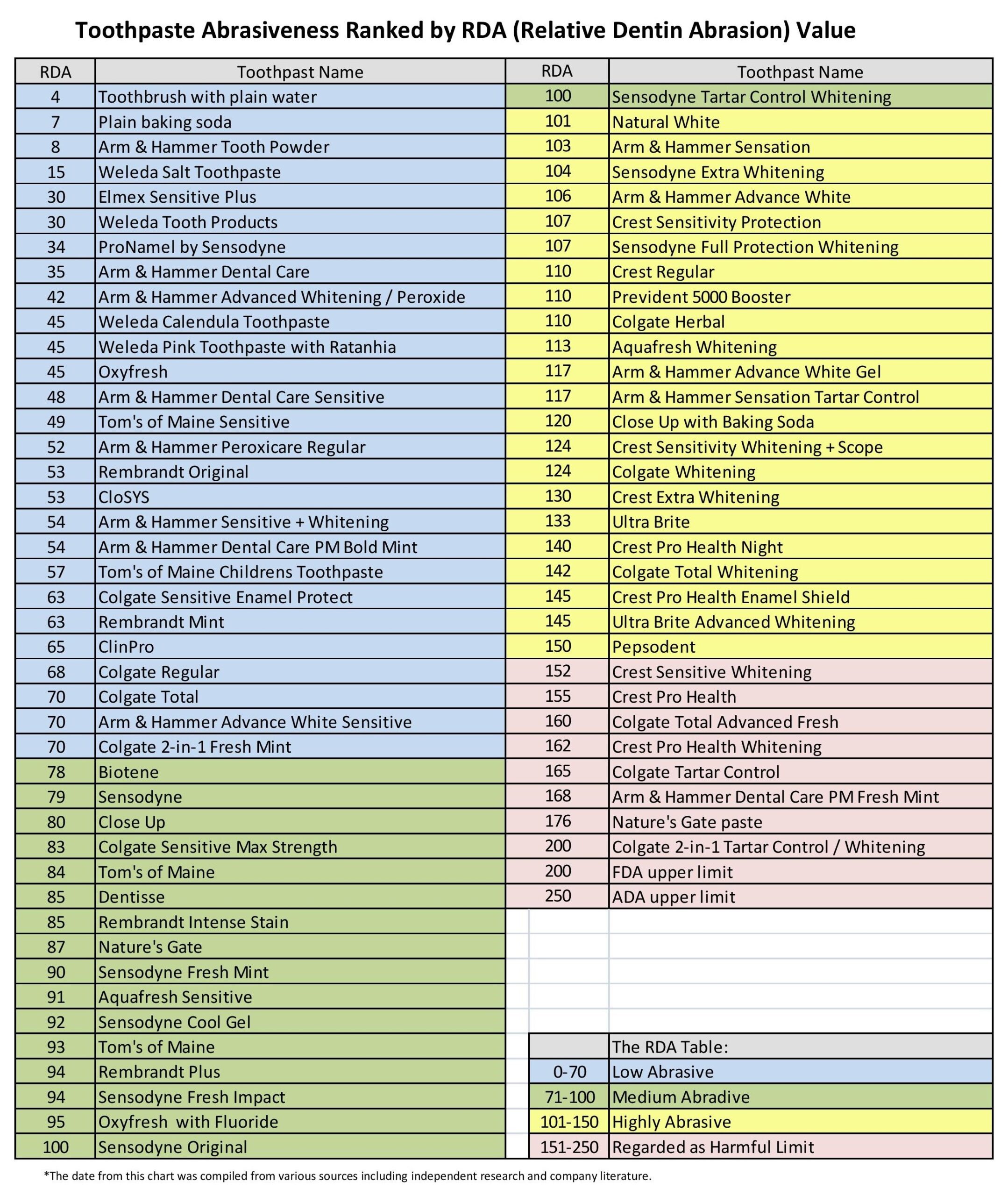
Chart values were compiled from independent research and manufacturer literature and may not reflect current formulations.
Fluoride-Free Products Need More Context
Fluoride-free toothpastes have become more visible, often alongside ingredients such as hydroxyapatite. Emerging research may support certain uses for hydroxyapatite, but product formulas, study quality, concentrations, and regulatory claims can differ considerably.
For most patients, fluoride is still the established default for cavity prevention. Do not assume a newer ingredient is automatically ineffective, equivalent, or superior based on package language alone. The evidence differs by product, not by category.
Your Toothbrush and Technique Still Matter
Even a well-selected toothpaste cannot compensate for rushed or incomplete brushing. Use a soft-bristled brush, clean for about two minutes twice daily, and give attention to the gumline, back molars, and other areas where plaque commonly remains.
The right toothbrush size and bristle design can make those areas easier to reach. For patients who benefit from timers, pressure sensors, or powered movement, switching to an electric toothbrush may also make a consistent technique easier to maintain.
Persistent Problems Need More Than a Product Swap
Changing toothpaste may help with mild sensitivity, surface stains, or plaque control, but ongoing symptoms should not be managed indefinitely in the dental-care aisle. Tooth pain, recurring sensitivity, bleeding gums, repeated cavities, or unexplained discoloration may point to a condition that requires diagnosis rather than a different flavor or specialty claim.
A comprehensive dental exam allows us to assess your teeth, gums, existing restorations, plaque, tartar, and possible decay. When X-rays are appropriate, AI-assisted cavity detection can highlight areas for us to review, while the final diagnosis and treatment recommendations remain based on clinical judgment.
Professional Care Complements Your Home Routine
Daily brushing controls plaque before it hardens, but toothpaste cannot remove established tartar. GBT dental cleanings can address deposits and biofilm that remain despite home care while giving the dental team a clearer view of which areas may need more attention.
These visits also create an opportunity to review whether your current toothpaste still fits your needs. Changes in sensitivity, cavity risk, gum health, dental work, medications, or dry mouth may justify a different formula over time rather than using the same product out of habit.
Choose Toothpaste With Guidance From Indian Trail Dental Studio

A practical toothpaste decision starts with fluoride and credible evidence, then narrows according to the concern you want to address. Whitening formulas may reduce surface stains, sensitivity products may ease certain symptoms, and gum-focused options may complement plaque control. These choices fit into the broader relationship between oral health and overall wellness and the preventive support available through general dentistry.
No toothpaste can diagnose why sensitivity, cavities, bleeding gums, or discoloration keep returning. Contact Indian Trail Dental Studio today so our team can evaluate your needs and explain why your toothpaste choice matters.