
When gum disease reaches below the gumline, a deep cleaning in Stallings, NC is the treatment that gets it back under control. At Indian Trail Dental Studio, on Old Monroe Road at the edge of Stallings, we perform scaling and root planing with the treated areas numbed, so the focus stays on healing rather than discomfort. Before your first treatment visit, we’ll also sort out what your insurance covers, so the only thing you need to think about is your gums.
4.9 ⭐ on Google with 500+ reviews · Emergency & same-day care · All ages welcome
Most Stallings residents have coverage. Census Bureau survey data shows about 95% of residents have health insurance, and roughly 62% are covered through an employer, which is often where dental benefits come from too. If you have a dental plan, it may well help with treatment, but deep cleanings rarely work the same way as the routine cleanings you’re used to.
Many plans place scaling and root planing in a different coverage category than preventive cleanings, which can mean a deductible or a share of the cost that a routine visit wouldn’t carry. Maintenance visits after treatment may be handled differently, too. That’s why we verify your benefits before treatment starts and explain any amount you’d owe, including any added steps like desiccation therapy, so nothing on the bill catches you off guard. You can also review your coverage and payment options ahead of your visit.

500+ Verified Reviews
★★★★★
My experience at Indian Trail Dental Studio was a very professional and friendly experience with very helpful information
– Sandi J.
★★★★★
It’s a lovely office with the latest diagnostic equipment. The staff was professional, kind and friendly and the dental cleaning exam was thorough and gentle. I highly recommend!!
– Daryl Anne S.
★★★★★
Such a great experience! As I had a horrible experience prior to finding this dentist office, Dr. Patel went above and beyond! The care and attention was wonderful in every way and I can’t say enough great things about this office and also the hygienist Grace! Thank you again!
– Jordan D.
Gum disease tends to show up in small ways first. Some signs you can notice at home, and others only show up in the chair.
Gums that bleed easily when you brush or floss, look swollen or darker red than usual, or feel tender. Breath that stays stale even after brushing, gums that seem to be shrinking back from your teeth, or a tooth that has started to feel slightly loose.
Gum pockets measuring 4 mm or deeper (healthy pockets are 1 to 3 mm), tartar packed below the gumline, or bone loss on your X-rays. Any of these usually means your gums need scaling and root planing.
Think of a routine cleaning as upkeep and a deep cleaning as repair. A routine cleaning keeps healthy gums healthy by clearing plaque and tartar at and above the gumline, and at our office it’s done with Guided Biofilm Therapy, a warm-spray cleaning technique that’s gentle on teeth and gums.
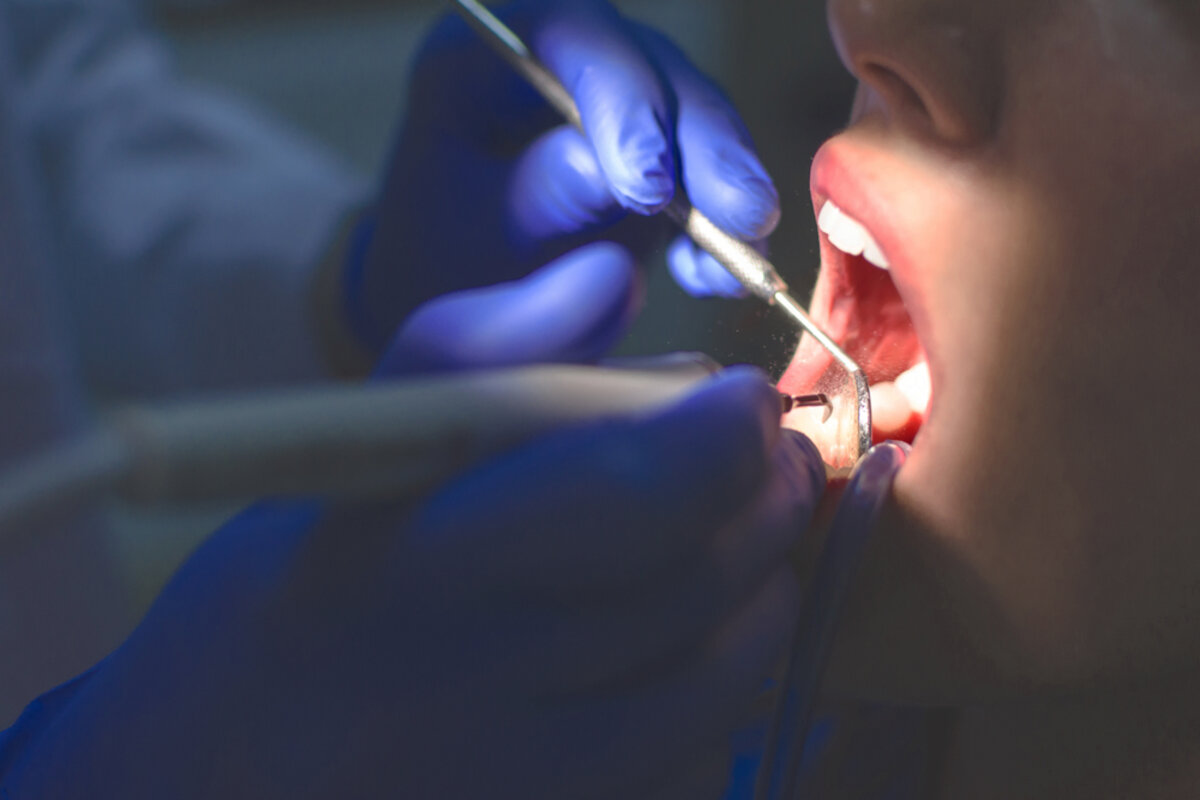
A deep cleaning goes further, working inside the pockets that gum disease has opened up. Your hygienist removes tartar and bacteria from the root surfaces, smooths those roots so the gums can reattach, and numbs the area first because the work happens below the gumline. Once your gums have healed and stabilized, regular upkeep takes over again, on a closer schedule.
Most patients finish active deep cleaning treatment in two visits, with a follow-up afterward. Here’s what each part of the process looks like.
We measure the pockets around every tooth, note bleeding, and review AI-assisted digital X-rays that highlight tartar and bone loss. You’ll see the results with us, along with your insurance estimate, before you decide anything.
Over two visits, we numb the areas being treated and work through each pocket with ultrasonic and hand instruments, lifting out tartar and bacteria before smoothing the roots. Pockets that need extra help may get desiccation therapy or a local antibiotic.
After a healing period, the treated pockets are measured again and compared with your starting numbers. From there, we set your maintenance schedule, usually every 3 to 4 months.
Desiccation therapy is an added option for areas where scaling and root planing alone may not clear everything. We use HYBENX, an in-office solution that dries out the bacterial film on teeth and gums, and we recommend it only after your exam shows a specific need. When it’s part of your visit, here’s how it fits in.
If we recommend desiccation therapy, we’ll show you which pockets need it and why, and it’ll be part of the estimate you see before treatment begins.
Expect some tenderness for a few days, and possibly a little sensitivity while your gums settle. Over the next few weeks, they should look firmer and bleed less. Brushing twice a day gently and cleaning between your teeth every day helps the treated areas heal well.
After a deep cleaning, your routine shifts from twice-a-year preventive cleanings to a maintenance visit every 3 to 4 months. The shorter gap matters because the bacteria behind gum disease can settle back into treated pockets faster than a six-month schedule can keep up with. Coming in more often keeps that buildup from getting a head start.
At each maintenance visit, your hygienist rechecks the treated pockets, compares the measurements with your earlier numbers, and clears any new buildup below the gumline. Spots that stay inflamed may get desiccation therapy for extra help. As your gums stabilize, we’ll adjust the timing as part of your gum disease care plan, so your schedule always reflects how your gums are actually doing.
Gum disease treatment works best when you trust the team doing it. Here’s what Stallings patients can expect from us.
From your first measurements to your maintenance plan, we’ll make each step clear.
If your gums have been bleeding, or you’ve been told you need a deep cleaning and want a clear plan, we’re ready to help. Bring your insurance information, and we’ll review your measurements, your options, and your costs together. Schedule online anytime, or give our team a call at 704-839-2434.
It depends on your plan’s coverage, deductible, and how many areas need treatment. We’ll give you an estimate after your exam and benefits check, before treatment begins.
Not always. Some plans treat periodontal maintenance differently from routine cleanings, with separate limits or cost sharing. We’ll check how yours handles it so you can plan ahead.
Then we focus treatment on those areas. Scaling and root planing is planned around your measurements, so healthy areas don’t need the same level of care.
A deep cleaning reaches below the gumline and along the tooth roots, where gums are tender and inflamed. Numbing keeps you comfortable while your hygienist works in those areas.
Usually, yes. X-rays show whether gum disease has affected the bone around your teeth, which helps us plan treatment. If you have recent X-rays from another dentist, let us know so we can request them.