
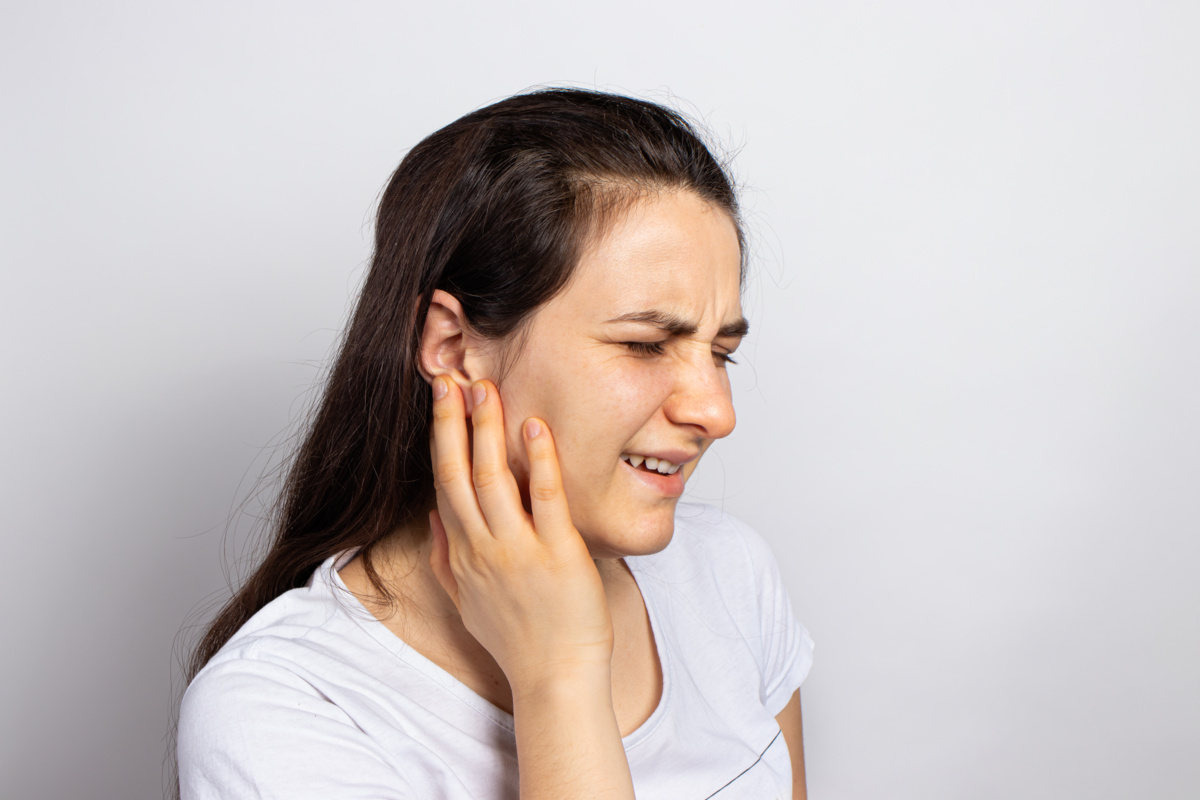
You’re eating lunch and suddenly notice a small pop or click in your jaw. It doesn’t hurt, but it feels unusual. If you’re experiencing jaw clicking when chewing, you may be wondering whether it’s harmless or a sign of something more serious.
Jaw noises are common, but they don’t all indicate a TMJ disorder. In some cases, occasional jaw popping is simply joint movement. In other cases, it may signal a developing issue involving the Temporomandibular Joint (TMJ). Understanding the difference helps you know when to monitor the symptom and when to seek professional evaluation.
Jaw Clicking Is Common — But it’s Not Always TMD
The jaw joint is one of the most frequently used joints in the body. It moves every time you speak, chew, yawn, or swallow, which means minor sounds are not unusual. According to the National Institute of Dental and Craniofacial Research (NIDCR), temporomandibular joint disorders (TMD) affect an estimated 5% to 12% of the population.
This statistic shows that while TMD is relatively common, the majority of people do not develop persistent dysfunction. Occasional clicking without pain does not automatically mean you have a TMJ disorder, but recurring or worsening symptoms deserve attention.
When Jaw Clicking When Chewing Is Likely Normal
In many cases, jaw clicking occurs without pain or functional problems. The sound may come from slight shifting of the joint disc or ligament movement as the jaw opens and closes.
Jaw clicking is more likely to be harmless when:
- There is no pain during chewing or speaking
- The jaw opens and closes fully without restriction
- There is no swelling or facial tenderness
- The sound occurs occasionally rather than constantly
Stress-related clenching or minor muscle tension can also cause temporary joint noises. If symptoms remain mild and do not progress, monitoring the situation may be appropriate. However, any change in frequency or discomfort should be evaluated.
When Should You Be Concerned About Your Jaw Clicking?
While some jaw sounds are benign, others indicate joint instability or inflammation. Knowing when you should be concerned about your jaw clicking helps prevent minor issues from becoming chronic problems.
Warning signs that suggest possible TMD include:
- Pain when chewing or speaking
- Jaw locking in an open or closed position
- Limited range of motion
- Frequent headaches or facial pain
- Ear discomfort without infection
- Changes in your bite alignment
- Persistent tenderness near the joint
These symptoms may signal disc displacement, joint inflammation, or muscle dysfunction. When jaw clicking is accompanied by pain or mechanical limitations, professional evaluation becomes important.
What Causes Jaw Popping and TMJ Disorder?
The temporomandibular joint (TMJ) functions as a sliding hinge connecting your jawbone to your skull. A small cushioning disc supports smooth movement, but when it shifts or surrounding muscles become imbalanced, often due to bite misalignment or dental changes, clicking or popping sounds may occur.
Common causes of jaw popping and TMJ disorder include:
- Disc displacement within the joint
- Teeth grinding (bruxism)
- Chronic clenching due to stress
- Arthritis affecting the joint
- Trauma to the jaw
- Bite misalignment
In some individuals, clicking occurs before pain develops. Early recognition allows for more conservative treatment approaches.
How a Family Dentist Evaluates Jaw Clicking
Evaluating jaw clicking when chewing involves more than listening to the sound. A comprehensive dental exam helps determine whether the issue involves the joint, muscles, bite alignment, or surrounding structures.
At Indian Trail Dental Studio, our family dental services include TMJ assessments designed to identify the root cause of symptoms. Evaluation may involve:
- Reviewing your medical and dental history
- Assessing jaw movement and range of motion
- Checking for muscle tenderness
- Evaluating bite alignment
- Imaging when necessary
Because we provide dental services in Indian Trail, NC, under one roof, patients benefit from coordinated dental care in one place. Whether the solution involves a custom night guard, bite adjustment, or TMJD treatment, having a clear diagnosis ensures appropriate care.
Schedule an Evaluation if Jaw Clicking Becomes Painful

If you are experiencing jaw clicking when chewing, monitoring the symptom is reasonable when it is painless and infrequent. However, persistent sounds combined with discomfort, locking, or headaches should not be ignored.
At Indian Trail Dental Studio, we help patients determine whether jaw popping is harmless or a developing TMJ disorder. As a trusted general family dentist in Indian Trail, NC, we focus on early diagnosis and conservative treatment whenever possible. If your jaw clicking is worsening or becoming painful, contact Indian Trail Dental Studio today. We can help prevent long-term joint complications and restore comfortable function.