
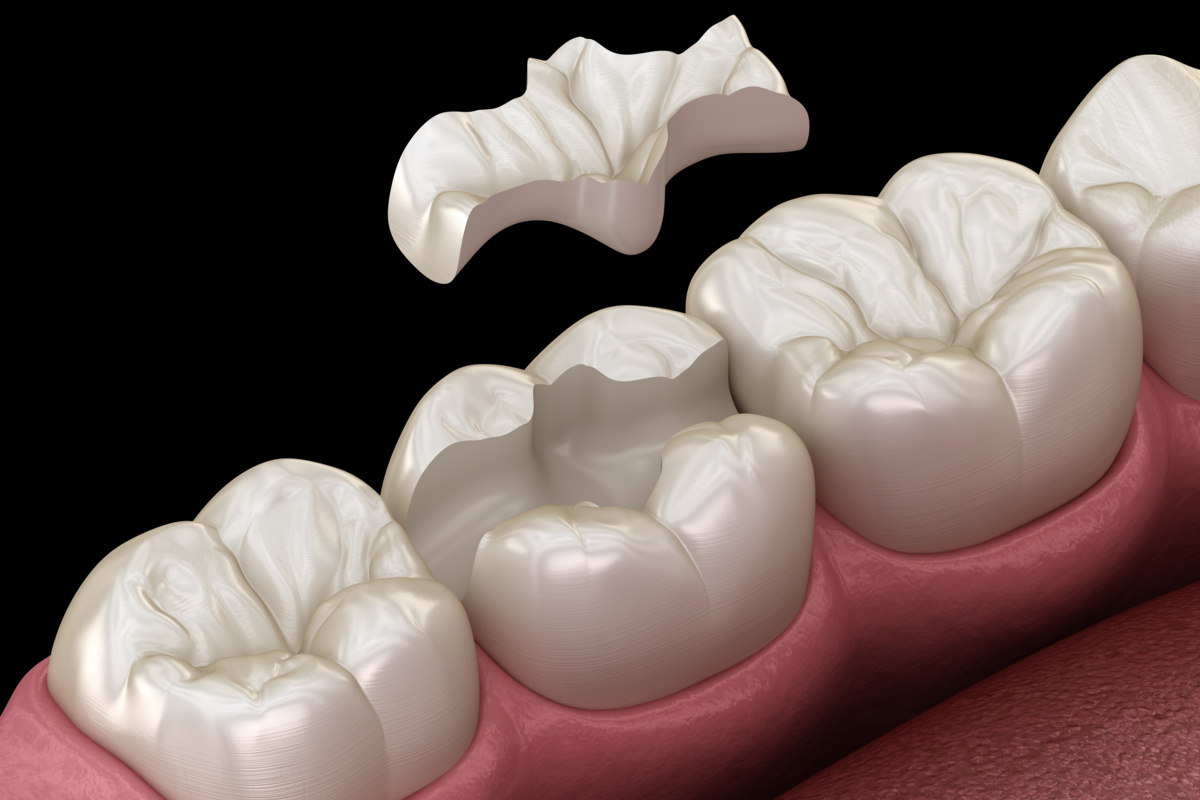
When a tooth is weakened by decay, fracture, or an old, failing filling, many patients assume a dental crown is the only option. But modern dentistry offers more conservative choices, including dental inlays or onlays, which help restore strength without removing healthy enamel. Understanding how these restorations differ helps you make a confident, informed decision about your care.
Patients in Indian Trail often ask which treatment will last longest, look most natural, or preserve the most tooth structure. Our goal is to provide a clear comparison so you know which option protects your oral health best.
What Are Dental Inlays or Onlays?
Inlays and onlays are custom restorations used when a tooth has damage too large for a simple filling but not severe enough to require a full crown. Let’s have a closer look at how they work:
- Inlays fit inside the grooves of a tooth.
- Onlays cover one or more cusps for added support.
They are typically made from porcelain or ceramic and bonded to the tooth for exceptional strength. A clinical study shows that inlays and onlays maintain more natural tooth structure and can offer excellent long-term durability. These restorations provide a strong, minimally invasive way to rebuild teeth when the damage is moderate but not extensive.
What Is a Dental Crown?
A dental crown is a full-coverage restoration that replaces the entire visible surface of a tooth. Crowns are recommended when a tooth is too damaged or weakened to hold an inlay or onlay. This often includes deep fractures, large old fillings, extensive decay, and root canal–treated teeth.
According to a JADA article, crowns remain one of the most predictable treatments when structural support is significantly compromised. Crowns give full protection when a tooth can no longer be safely restored with a smaller restoration.
Dental Inlays or Onlays vs. Crowns: Key Differences
Choosing the right treatment depends on the size of the cavity, the strength of the remaining tooth, and long-term durability needs.
Preservation of Natural Tooth Structure
Inlays/Onlays remove only the damaged portion of the tooth. Research confirms that minimal tooth reduction helps maintain long-term strength and stability. On the other hand, crowns require shaping the entire tooth, including healthy enamel.
If preserving natural tooth structure is a priority, inlays or onlays are often the more conservative option.
Strength and Longevity
When bonded, inlays/onlays create a tight seal that reinforces the tooth. A long-term study found high survival rates and low complication rates for inlays/onlays over many years. Conversely, crowns remain one of dentistry’s most durable solutions, especially for teeth exposed to heavy bite pressure.
Both options are strong, but your bite patterns and tooth condition determine which will last longer.
Aesthetic Results
Inlays/Onlays restorations can blend smoothly with natural enamel because they replace only the affected areas, whereas crowns offer excellent esthetics but may require more extensive shaping first.
If subtlety and enamel preservation matter, inlays or onlays often provide a cleaner, more natural look.
When Each Option Is Recommended
To make the right decision, we evaluate how much of the tooth is healthy and how much requires rebuilding through our comprehensive dental exam.
Inlays or Onlays Are Ideal When:
- The cavity or fracture is moderate
- Most of the tooth is still intact
- You want a conservative restoration
- You prefer a bonded, enamel-saving solution
Crowns Are Ideal When:
- Damage covers most of the tooth
- The tooth is cracked or severely weakened
- There is significant structural loss
- A long-term, full-coverage restoration is necessary
Restorative success depends on choosing the option that balances strength, conservation, and long-term function.
Should You Choose Dental Inlays or Onlays Instead of a Crown?
Dental inlays or onlays can be an excellent middle-ground between a simple dental filling and a full crown. They allow us to maintain more of your natural tooth and provide durable support. Many patients prefer inlays/onlays because they are more conservative, offer strong ceramic bonding, provide long-lasting support, and yield natural-looking results.
This decision should always be based on the condition of your tooth and how much structure needs reinforcement.
What to Expect During Treatment
Patients often feel more comfortable knowing what each treatment involves.
Inlay/Onlay Steps:
- Cleaning and preparing the tooth
- Digital or traditional impressions
- Placement of a temporary restoration
- Bonding the final ceramic restoration on the second visit
Crown Steps:
- Shaping the entire tooth
- Impression or digital scan
- Temporary crown
- Cementation of the final crown
Both treatments are straightforward, but inlays/onlays are less invasive because they require less removal of healthy enamel.
Restoring a Damaged Tooth Starts With Choosing the Right Treatment

Restoring a damaged tooth is essential for long-term comfort and function. Dental inlays or onlays offer a conservative, durable option when preservation is possible, while crowns provide full protection when the damage is extensive. Research supports both as reliable, long-lasting solutions, and the best choice depends on your tooth’s structure, bite forces, and long-term needs.
For expert restorative care, modern technology, and a personalized treatment approach, contact Indian Trail Dental Studio today. We help you choose the restoration that protects your smile and supports long-term oral health.
FAQ About Inlays, Onlays, and Crowns
1. Do inlays and onlays last as long as crowns?
Many studies show comparable long-term success, especially when enough tooth structure remains.
2. Are inlays/onlays more conservative than crowns?
Yes. They preserve more of your natural tooth and strengthen the damaged area.
3. Does dental insurance cover these restorations?
Coverage varies, but many plans help pay for inlays, onlays, or crowns when medically necessary.
4. How do I know which option I need?
A clinical exam, X-rays, and evaluation of tooth structure determine the right treatment.