
Many patients come to us wanting a long-lasting solution for missing teeth, but feel unsure whether all-on-4 dental implants or traditional implants offer the best results. Tooth loss can affect confidence, chewing ability, and overall oral health, which is why choosing the right treatment matters.
For individuals searching online for a dentist near Indian Trail, NC, it can be overwhelming to compare procedures without guidance. A dental implant decision starts with understanding your options. Our goal is to explain the differences clearly, so you can make an informed decision based on your health, goals, and lifestyle.
What Are All-on-4 Dental Implants?
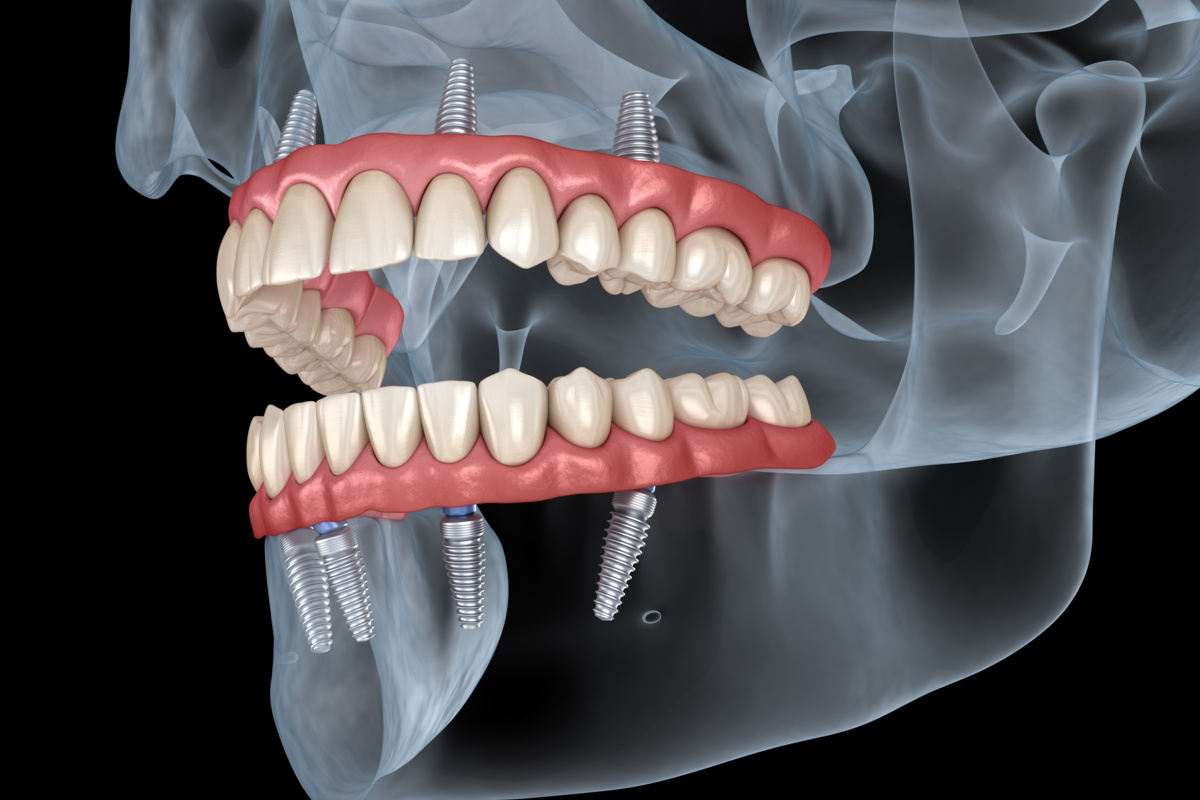
All-on-4 is a full-arch replacement method that uses four strategically placed implants to support a complete set of upper or lower teeth. It offers a streamlined way to restore function and appearance for patients missing most or all teeth.
How All-on-4 Dental Implant Works
This method places two implants vertically in the front of the jaw and two angled implants in the back. The angulation increases stability and maximizes bone support. One study shows that the angled posterior implants improve stress distribution and reduce the need for bone grafting.
This means that an all-on-4 creates a stable foundation for a fixed full-arch prosthesis with fewer implants and less invasive preparation.
What Are Traditional Dental Implants?
Traditional implants replace teeth individually or support bridgework, depending on the patient’s needs. Each implant is placed vertically and must integrate fully into the bone before a crown or bridge is added. This often requires more implants, more healing time, and occasionally bone grafting.
According to a long-term study of single dental implants, individual implants offer excellent long-term predictability and high survival rates when bone density is adequate. Take note that traditional implants are ideal for single-tooth replacement or cases where precise tooth-by-tooth restoration is desired.
All-on-4 Dental Implants vs. Traditional: Key Differences
Patients often ask which method is “better,” but the answer depends on your oral health, budget, and long-term goals.
Number of Implants Required
All-on-4 dental implants use a minimum of four implants per arch. This is ideal for full-arch replacement with fewer implants and shorter surgical time. Traditional dental implants require one implant per missing tooth or multiple implants to support a bridge, ideal for patients wanting individual tooth restoration.
The difference in implant quantity often influences cost, healing time, and treatment planning.
Bone Requirements
Because the rear implants are angled, many patients avoid bone grafting. Research indicates angulated implants improve stability even in areas with reduced bone. On the other hand, traditional often requires bone grafting, especially for long-term tooth loss or weak bone density.
Patients with significant bone loss may prefer All-on-4 to reduce extra procedures.
Treatment Time and Recovery
All-on-4 allows placement of a temporary set of teeth the same day. Research supports high immediate loading success rates when implants achieve primary stability. Traditional healing may take several months before crowns or bridges can be attached.
If you want faster results, All-on-4 may be the more convenient choice.
Cost and Dental Insurance
Fewer implants and fewer surgeries often mean lower total cost, though insurance coverage varies. This is also beneficial for patients comparing out-of-pocket costs.
Meanwhile, traditional option costs increase with each implant, crown, or grafting procedure, and insurance may partially cover components, but rarely full restoration. We help patients understand how dental insurance applies and offer clear treatment plans.
Long-Term Maintenance
All-on-4 requires diligent hygiene and regular checkups to protect the prosthesis and implants. Regardless of the method you choose, consistent dental implant care is essential for preventing complications and ensuring the longevity of your new smile.
Ultimately, your lifestyle and hygiene habits play a major role in the long-term success of either option.
Who Is a Good Candidate for All-on-4 Dental Implants?
Choosing between implant options begins with understanding whether an all-on-4 aligns with your specific dental needs and long-term goals. Given the recent rise in dental implant procedures, more patients are seeking efficient ways to restore their smiles. This treatment is designed for patients who want a stable, full-arch solution without the complexity of multiple surgeries or individual implants. All-on-4 works well for patients who:
- Are missing many or all teeth
- Want fewer surgeries
- Prefer faster, same-day results
- Have moderate bone loss
- Desire a secure alternative to dentures
If you’ve struggled with dentures, missing teeth, or declining oral function, All-on-4 may offer a more secure and comfortable alternative.
Who Should Consider Traditional Implants?
Traditional implants remain one of the most reliable and natural-feeling tooth replacement options available. They are ideal for patients who want a long-term, customized solution that restores individual teeth with exceptional strength and stability. If you prefer a treatment that closely mimics the look and function of natural teeth, this may be the best path for you. Traditional implants are well-suited for:
- Patients missing only one or a few teeth;
- Those who want individualized replacement;
- Patients with strong bone density, and
- People who are comfortable with a longer treatment timeline.
Traditional implants offer unmatched flexibility and precision, making them an excellent choice when restoring individual teeth or small gaps. Both options deliver strong, lasting results, but the right treatment depends on how many teeth you need replaced, your bone structure, and the type of long-term maintenance you prefer.
Considering Permanent Tooth Replacement? Let Us Guide Your Next Step

All-on-4 dental implants provide a streamlined, predictable solution for full-arch replacement with fewer surgeries and faster results. Traditional implants remain a top choice for individual tooth replacement and offer unmatched flexibility for specific cases. Both have excellent survival rates when chosen appropriately.
For a detailed evaluation, customized treatment plan, and compassionate dental care in Indian Trail, contact Indian Trail Dental Studio today. Our team provides advanced implant restoration, modern diagnostics, and the trusted expertise patients look for when searching for a dentist near Indian Trail.
FAQ About All-on-4 and Traditional Dental Implants
1. How do I know which implant option is right for me?
The best choice depends on the number of teeth you are missing, your bone health, and your goals for comfort and long-term stability. During your consultation, we evaluate these factors and recommend the option that provides the strongest and most predictable outcome.
2. Will my dental insurance cover the cost of implants?
Insurance coverage varies. Some plans contribute to portions of implant treatment, while others cover only dentures or crowns. We review your benefits with you and help estimate your out-of-pocket costs before treatment begins.
3. What happens if I wait too long to replace missing teeth?
Delaying treatment may lead to bone loss, shifting teeth, bite changes, and a higher risk of oral health problems. Replacing missing teeth early helps maintain bone health and overall facial support.